
August 3, 2026
Oily Scalp, Flat Roots? Here's the Real Reason Your Hair Gets Greasy So Fast
Washing your hair every day and still feeling greasy by noon isn't bad luck — it's usually a cycle you're accidentally feeding. Here's what actually controls oil production, and how to break the cycle for good.
An over-stripped scalp doesn't stay clean longer — it just learns to produce oil faster.
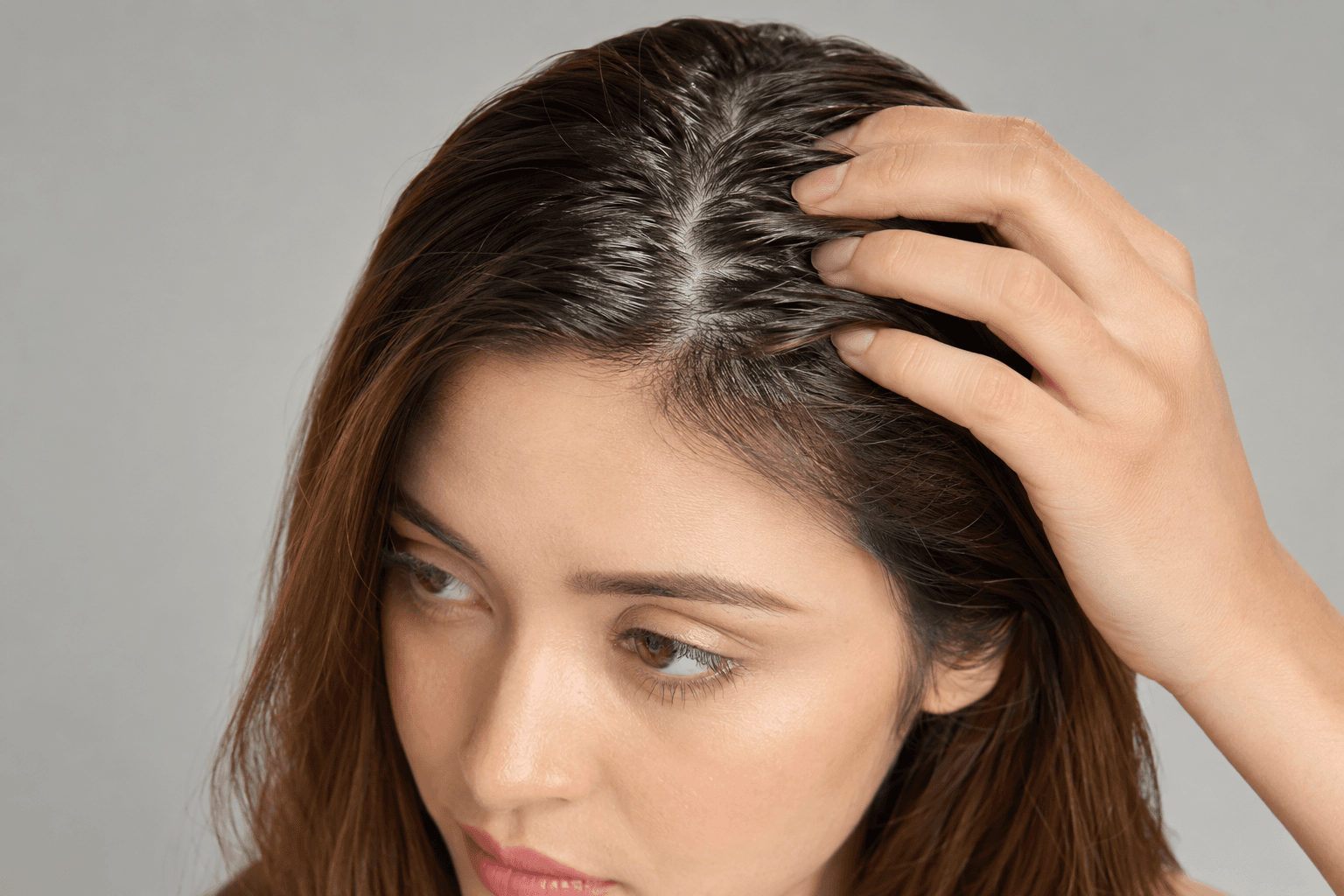
Waking up with fresh, clean hair only to feel it turning limp and greasy by the afternoon is one of the most frustrating hair concerns out there — and one of the most misunderstood. The instinct is almost always to wash more often, but that instinct is usually part of what's keeping the cycle going.
What's Actually Producing the Oil
Every scalp has sebaceous glands that produce sebum — a natural oil that protects hair and skin. An oily scalp isn't broken; it's simply producing more sebum than it needs to, often triggered by:
Over-washing — Stripping natural oils daily signals the scalp to produce even more sebum to compensate, creating a self-feeding cycle.
Hormonal fluctuations — Puberty, menstrual cycles, and stress all influence sebum production directly.
Genetics — Some people are simply predisposed to more active sebaceous glands.
Product buildup — Heavy conditioners and styling products applied too close to the roots trap oil and add extra weight.
Touching your hair frequently — Hands transfer oil directly to strands throughout the day.
Humid climates — Heat and humidity naturally stimulate more oil production.
Breaking the Cycle
Resist the urge to over-wash. Stripping the scalp daily often backfires by triggering more oil production. Gradually spacing out washes trains the scalp to normalize.
Use a clarifying treatment weekly, not daily. A deeper cleanse once a week removes buildup without disrupting the scalp's natural balance the way daily harsh washing does.
Keep conditioner away from the roots. Apply moisture from mid-length to ends only — roots rarely need extra richness.
Choose lightweight, oil-balancing formulas. Heavy, creamy products near the scalp make the problem worse, even if they feel luxurious.
Try dry shampoo strategically. It absorbs excess oil between washes, but shouldn't replace actual cleansing — buildup from dry shampoo itself needs regular clarifying.
Give your scalp a detox occasionally. A monthly deep-cleansing scalp treatment removes buildup that regular shampoo can miss.
Oily Scalp Doesn't Mean Oily Ends
One of the trickiest parts of an oily scalp is that the ends of the same hair can be completely dry — especially with longer hair. This means the fix usually isn't a single product for the whole head, but a routine that balances the roots and hydrates the lengths differently.
Your Scalp's Balance Is Personal
Genetics, climate, hormones, and hair length all affect how much oil your particular scalp produces, and the right routine reflects that. Our hair quiz takes your scalp's specific behavior into account before recommending anything, matching you with a routine that actually rebalances oil production rather than fighting it aggressively — because an over-stripped scalp usually just overproduces oil faster in response.
An oily scalp isn't something to fight harder — it's something to understand and work with. Once the cycle is broken, most people notice their hair simply needs washing less, not more.
More Articles